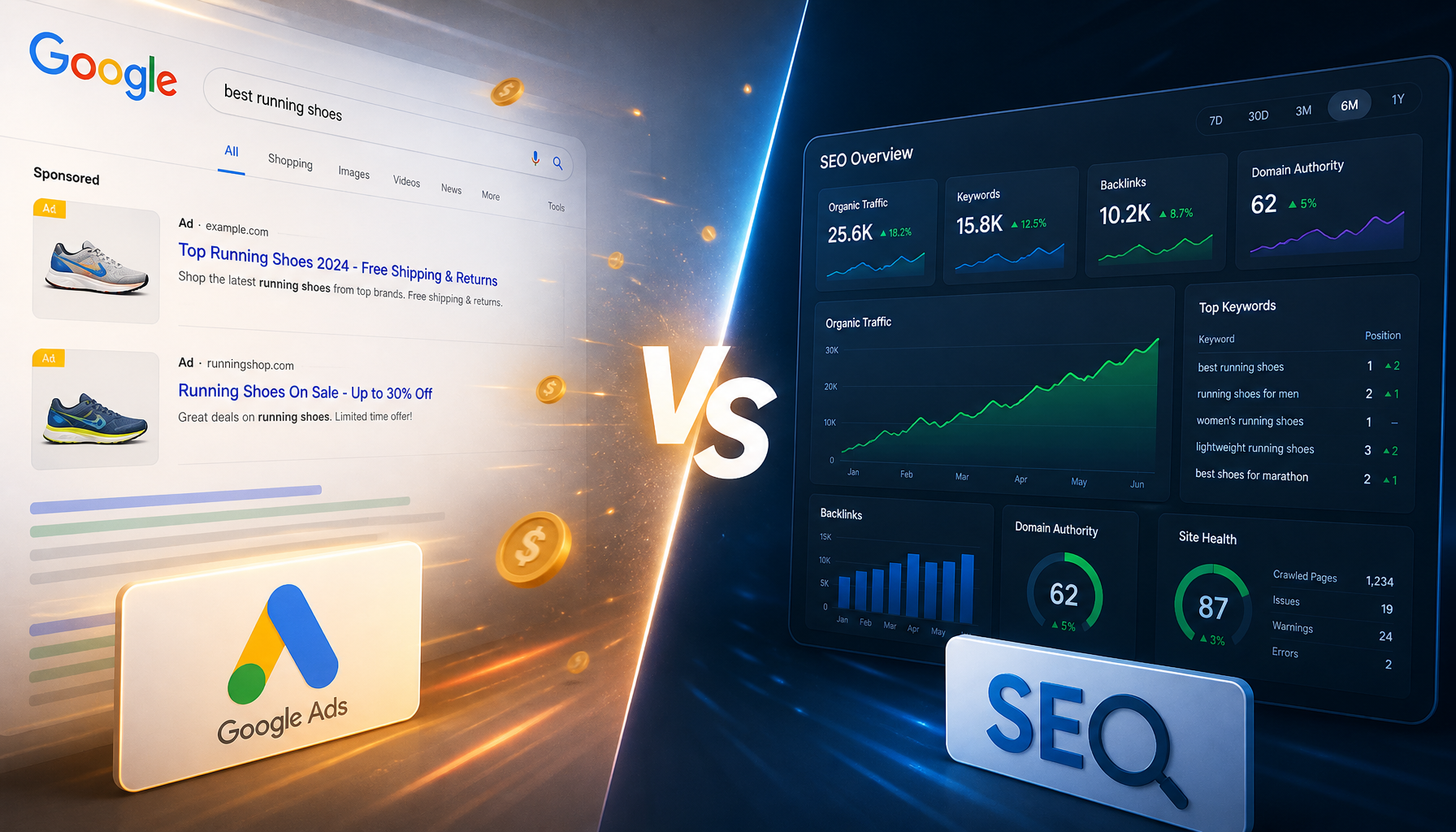
Understanding Google Ads and SEO: An Overview
What is Google Ads?
Google Ads is a pay-per-click (PPC) advertising platform that allows businesses to display ads on Google search results and its advertising network. It offers immediate visibility and can be highly effective for targeted campaigns. However, it requires ongoing investment, as costs are incurred each time a user clicks on an ad.
Google Ads can be particularly beneficial for new businesses seeking quick exposure. The ability to target specific demographics and keywords ensures that ads reach the right audience. However, the cost of Google Ads varies widely depending on industry competitiveness and keyword popularity.
For businesses looking to quickly boost visibility and drive traffic, Google Ads offers a direct route to the top of search results. It’s essential to monitor and optimize campaigns to ensure a high return on investment (ROI).
What is SEO?
Search Engine Optimization (SEO) involves optimizing your website to improve organic search engine rankings. SEO focuses on enhancing website content, structure, and backlinks to increase visibility and traffic over time. Unlike Google Ads, SEO does not require payment for each click, making it a cost-effective long-term strategy.
SEO benefits over Google Ads include sustained visibility and credibility. A well-optimized site can attract organic traffic consistently without ongoing ad spend. However, achieving high rankings typically takes time, and results are not immediate.
Implementing SEO involves understanding search algorithms, keyword research, and content creation. For businesses aiming for long-term growth, SEO provides a solid foundation.
Google Ads vs SEO Comparison: Key Differences
Cost Analysis
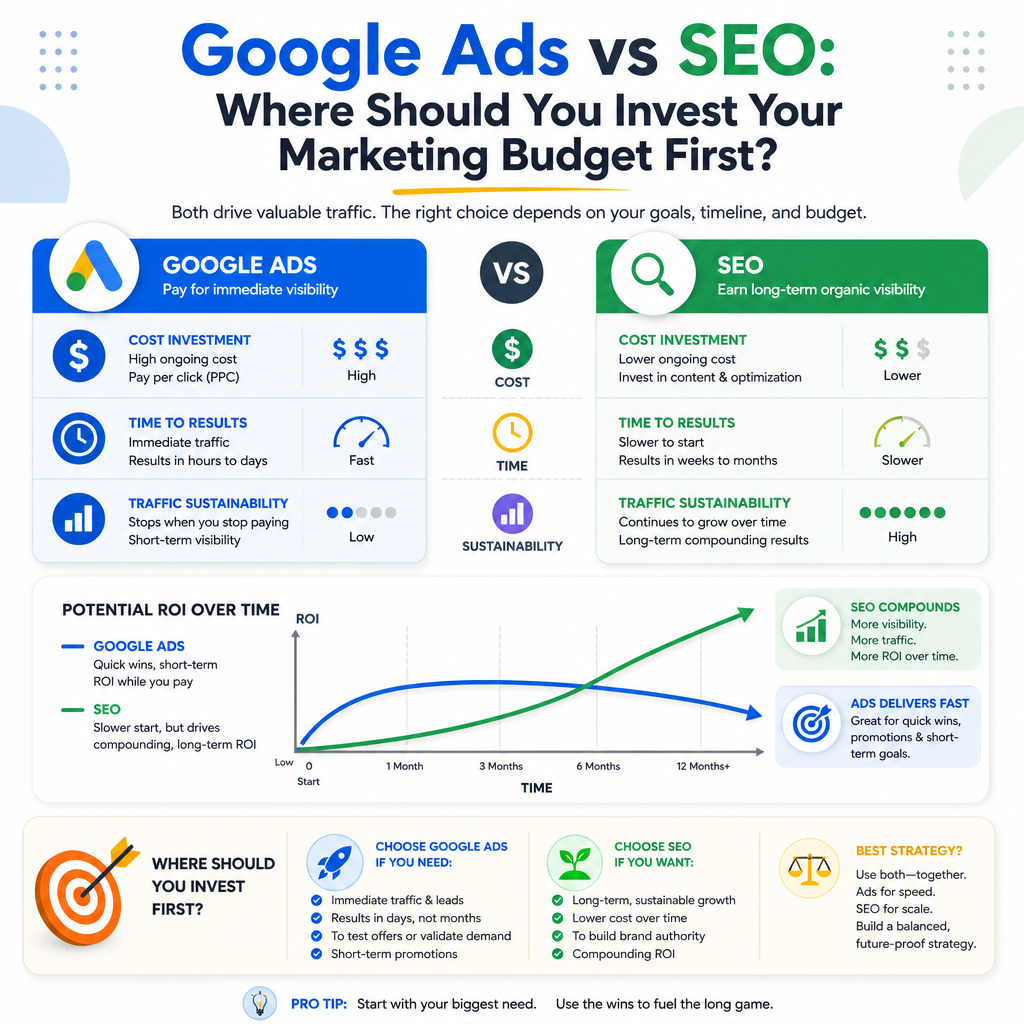
When comparing the cost of Google Ads vs SEO, it’s important to consider both short-term and long-term expenses. Google Ads requires a budget for each click, which can add up quickly in competitive industries. In contrast, SEO involves upfront investments in content and website improvements but offers cost-effective results over time.
For businesses with limited budgets, starting with SEO may be more feasible. However, those needing rapid results might prioritize Google Ads initially. It’s crucial to align your strategy with available resources and desired outcomes.
Time to Results
The time it takes to see results is a significant factor in the Google Ads vs SEO comparison. Google Ads delivers immediate visibility, making it ideal for urgent campaigns or product launches. Conversely, SEO requires patience, as it can take months to achieve significant rankings.
Businesses must decide whether they can wait for organic growth or need instantaneous results. A balanced approach involving both strategies may offer the best of both worlds.
Target Audience and Intent
Understanding audience intent is crucial when deciding between Google Ads and SEO. Google Ads allows for precise targeting based on demographics, location, and search intent, making it suitable for highly specific markets.
SEO, on the other hand, captures a broader audience by optimizing for keywords that align with natural search behaviors. This approach builds brand authority and trust over time.
Consider the nature of your products or services and how your target audience searches for them when choosing your strategy.
Best Marketing Strategy: Google Ads or SEO?
When to Choose Google Ads
Businesses should use Google Ads when quick visibility is necessary, such as during product launches or time-sensitive promotions. The platform is also beneficial for businesses with a clear understanding of their target audience and budget.
For instance, a retail company launching a new seasonal line might use Google Ads to capture immediate interest and drive sales. The ability to quickly adjust ad spend and targeting allows for agile marketing strategies.
However, it’s important to continuously monitor performance metrics and optimize ads to maximize ROI. Businesses can refer to resources like this guide for affordable SEO packages that complement Google Ads efforts.
When to Prioritize SEO
SEO should be prioritized by businesses aiming for long-term growth and organic traffic. Companies with limited advertising budgets will benefit from the cost-effectiveness of SEO over time.
For example, a B2B service provider might focus on SEO to establish industry authority and generate leads through informative content. The slow but steady approach of SEO can lead to increased brand recognition and trust.
Referencing SEO & Content Writing services can help businesses develop a comprehensive strategy that enhances organic reach.
Real-World Case Study
Case Study Overview
A digital marketing agency, “Digital Edge,” faced a choice between Google Ads and SEO. They initially invested $10,000 in Google Ads, targeting high-competition keywords. Despite generating traffic, the conversion rate remained low.
Analyzing ROI, they shifted focus to SEO, creating high-quality content and optimizing their website. Within six months, organic traffic increased by 150%, and the conversion rate improved by 35%.
This case highlights the importance of evaluating performance metrics and adjusting strategies based on results. The agency’s decision to integrate SEO resulted in sustainable growth and cost savings.
Lessons Learned
Digital Edge learned that a hybrid approach often yields the best outcomes. By initially using Google Ads for immediate results and gradually transitioning to SEO, they achieved both short-term gains and long-term stability.
The case underscores the importance of flexibility in marketing strategies. Businesses should continually assess their target market, budget, and goals to determine the optimal investment between Google Ads and SEO.
Troubleshooting & Costly Mistakes to Avoid
Common Pitfalls in Google Ads
One common mistake when using Google Ads is neglecting to monitor campaigns regularly. Without optimization, ad spend can quickly exceed the budget without delivering desired results.
Another pitfall is targeting overly broad keywords, leading to clicks from users who are not in the buying phase. Businesses must refine their targeting to reach potential customers more effectively.
SEO Missteps to Avoid
In SEO, a significant mistake is neglecting keyword research. Optimizing for irrelevant or low-traffic keywords can hinder visibility. Consistent monitoring of search trends and competitor analysis is essential.
Additionally, underestimating the importance of quality content can impair SEO efforts. Businesses should focus on creating valuable, informative content that meets user needs and search engine criteria.
Exhaustive FAQ Section
What are the main differences between Google Ads and SEO?
The primary difference between Google Ads and SEO lies in cost and timing. Google Ads is a paid advertising method offering immediate results, while SEO is a long-term strategy focused on organic growth without direct costs per click.
Both methods have unique advantages, and businesses should assess their needs to choose the most suitable strategy. Combining both can often lead to the best results by leveraging the strengths of each.
Should I invest in Google Ads or SEO first?
The decision to invest in Google Ads or SEO first depends on your business goals and timeline. If immediate visibility and traffic are priorities, Google Ads is a sensible choice. For long-term growth and cost-effectiveness, SEO should be prioritized.
Consider your budget, industry competition, and target audience when making this decision. A balanced approach using both strategies can provide comprehensive benefits.
How do I measure the ROI of Google Ads and SEO?
Measuring the ROI of Google Ads involves tracking key metrics such as click-through rates, conversion rates, and cost per acquisition. Google Analytics and Ads Manager provide comprehensive tools for monitoring performance.
For SEO, ROI is assessed through organic traffic growth, keyword rankings, and engagement metrics. Tools like Google Search Console and third-party analytics platforms offer insights into SEO performance.
Can Google Ads and SEO work together effectively?
Yes, Google Ads and SEO can complement each other to maximize marketing impact. Using Google Ads can provide immediate exposure while SEO builds long-term authority and organic traffic.
By integrating both strategies, businesses can cover a wide range of audience targeting and achieve both short-term and long-term goals. Consistent analysis and adjustments ensure optimal performance.
For a comprehensive strategy that includes both approaches, explore GABBARINFO AI and other digital marketing solutions.
When should I use Google Ads instead of SEO?
Google Ads should be used when rapid results are needed, such as during special promotions, new product launches, or competitive periods. It’s also ideal for targeting specific demographics with precision.
While SEO should not be neglected, Google Ads provides the agility to quickly adapt to market changes and capitalize on timely opportunities. Businesses must assess their specific needs and timelines to decide when to prioritize Google Ads.
