1. The Strategic Evolution of Mastering SEO Optimization: The Blueprint for Outranking Competitors and Scaling ROI in 2026
In the constantly evolving digital landscape, mastering SEO Optimization has become more critical than ever for businesses aiming to outrank competitors and scale their return on investment (ROI). As we look into 2026, the importance of understanding the strategic evolution of SEO cannot be overstated. With search engines continually refining their algorithms, businesses must adapt to maintain visibility and relevance. This means not just focusing on keywords, but also understanding search intent, user experience, and the overall content ecosystem. The shift towards semantic search, voice search, and AI-driven recommendations suggests that the future of SEO will hinge on delivering value rather than merely optimizing for rankings.
Moreover, businesses must embrace a holistic approach to SEO Optimization that integrates content marketing, social media strategies, and data analytics. This comprehensive strategy not only enhances organic search results but also facilitates a deeper engagement with target audiences. The integration of advanced technologies, such as machine learning and predictive analytics, will further empower businesses to anticipate market trends and consumer behavior, thereby allowing them to stay ahead of the curve. In 2026, success in SEO will be determined by the ability of businesses to create a seamless digital experience that caters to user needs and drives conversion.
2. Core Foundations and Search Entity Optimization
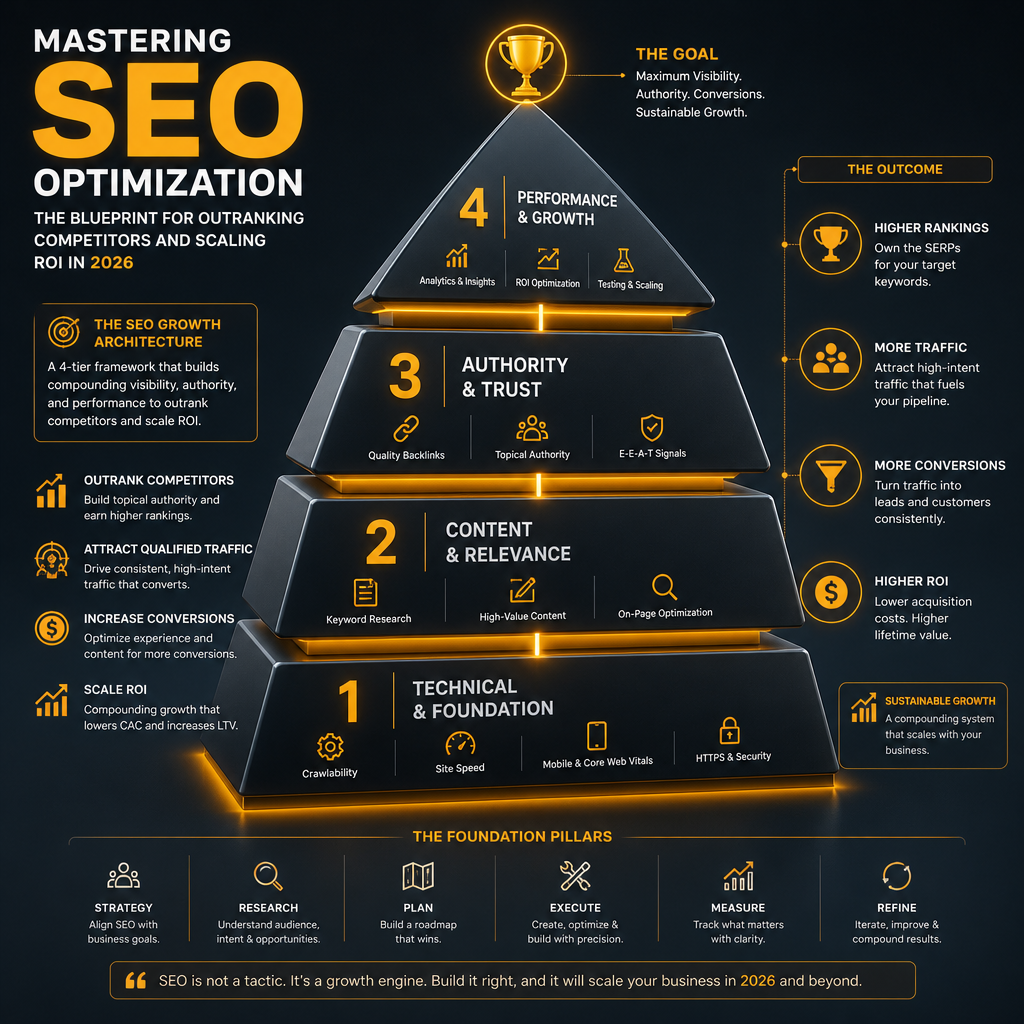
The foundation of effective SEO lies in understanding the core principles that guide search engines in ranking content. Search engines like Google have evolved to prioritize search entity optimization, which encompasses various elements such as algorithmic shifts, search intent, and topical authority. The recent updates to Google’s algorithms emphasize the importance of delivering relevant content that aligns with user intent. In practical terms, this means that businesses must focus on creating high-quality, authoritative content that answers specific queries and addresses the needs of their target audience.
Understanding search intent is crucial for optimizing content effectively. There are generally four types of search intent: informational, navigational, transactional, and commercial investigation. By identifying the intent behind a user’s search, businesses can tailor their content to meet those needs. For instance, if a user is looking for
