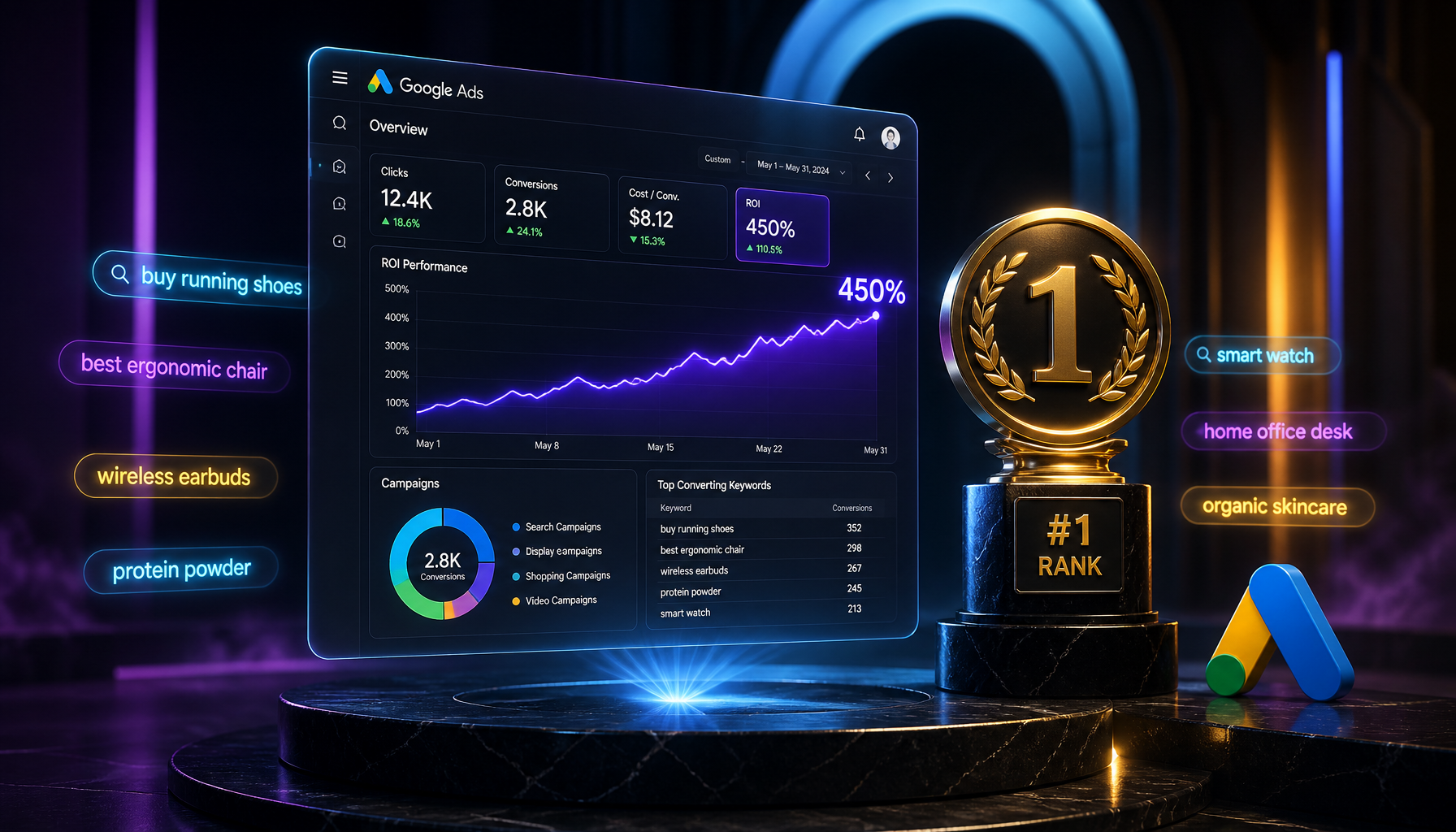
In the rapidly evolving digital landscape of 2026, merely running ad campaigns is no longer sufficient. True market leadership demands a holistic, data-driven approach that integrates every facet of online presence. This comprehensive guide delves into the strategic evolution required to move Beyond Google Ads Management, transforming your digital footprint into a powerhouse of organic growth, commercial conversion, and sustained profitability. We’re not just talking about incremental improvements; we’re outlining a roadmap for exponential revenue acceleration, leveraging cutting-edge SEO tactics, robust content strategies, and precision-targeted digital marketing.
1. The Strategic Evolution of Beyond in 2026
The Shifting Digital Landscape
The digital realm in 2026 is a complex ecosystem, far removed from the simpler days of keyword stuffing and basic ad placements. Search engine algorithms have become incredibly sophisticated, prioritizing user experience, genuine authority, and deeply relevant content. The rise of AI-powered search, multimodal search, and hyper-personalized results means that brands must adapt at an unprecedented pace. It’s no longer enough to rank for a few keywords; businesses must establish themselves as definitive entities within their niche, offering unparalleled value at every touchpoint. This requires a proactive stance, constantly analyzing algorithmic shifts and user behavior to stay ahead of the curve, ensuring that every piece of content and every ad dollar spent contributes to a cohesive, high-impact strategy.
Beyond Traditional Marketing: A New Paradigm
The concept of “Beyond” in 2026 signifies a paradigm shift from siloed marketing efforts to an integrated, synergistic approach. Traditional High-ROI Digital Marketing focuses on individual channels, but the future demands a unified strategy where SEO, content, social, email, and paid advertising—including advanced Google Ads Management—work in concert. This integration creates a compounding effect, where the sum is far greater than its parts. By moving beyond conventional boundaries, businesses can unlock new avenues for audience engagement, build stronger brand loyalty, and ultimately drive superior commercial outcomes. The goal is to create an omnipresent brand experience that resonates with users across all platforms, fostering trust and encouraging conversion.
2. Core Foundations and Search Entity Optimization
Navigating Algorithmic Complexity
Google’s algorithms, particularly with advancements like RankBrain, BERT, and MUM, are now more adept than ever at understanding context and user intent. This means that simply optimizing for exact-match keywords is an antiquated strategy. Businesses must now focus on creating comprehensive content that addresses the full spectrum of user queries around a topic, demonstrating deep expertise, authoritativeness, and trustworthiness (E-E-A-T). Understanding how these complex algorithms interpret and rank information is paramount to achieving consistent visibility. This involves meticulous keyword research that uncovers semantic relationships, long-tail opportunities, and emerging trends, rather than just high-volume terms.
Mastering Search Intent & Topical Authority
At the heart of modern SEO lies the mastery of search intent. Is the user looking for information (informational), a comparison (commercial investigation), a specific product (transactional), or navigation? Tailoring content precisely to these intents dramatically improves engagement and conversion rates. Simultaneously, building topical authority involves creating an exhaustive cluster of interlinked content that thoroughly covers a specific subject matter. By demonstrating comprehensive knowledge across all facets of a topic, brands can signal to search engines that they are the definitive resource, thereby boosting rankings for a wide array of related keywords. This is a foundational element of any successful SEO & Content Writing Services strategy.
3. High-Converting Content Architecture & Pillar Page Mechanics
Crafting Engagement-Driven Content Structures
Effective content in 2026 is not just about words; it’s about structure, flow, and user experience. Pillar pages, like this one, serve as comprehensive hubs, covering a broad topic and linking to more detailed “cluster content.” This architecture not only organizes information logically for users but also signals to search engines the depth of your topical authority. Each piece of content must be meticulously planned, from compelling headlines and introductory hooks to scannable subheadings, bullet points, and clear calls to action. The goal is to maximize dwell time, minimize bounce rates, and guide the user seamlessly through their journey, providing answers and solutions at every turn.
Readability, Persuasion & Conversion Optimization
Beyond structure, the actual prose must be highly readable and persuasive. Utilizing clear, concise language, active voice, and varying sentence structures keeps readers engaged. Incorporating storytelling, data-backed insights, and compelling visuals further enhances the experience. Crucially, every piece of content, especially on a pillar page, must be designed with conversion in mind. Whether it’s signing up for a newsletter, downloading a guide, or requesting a consultation, the conversion path must be intuitive and frictionless. A well-optimized pillar page doesn’t just inform; it inspires action, turning passive readers into active prospects and ultimately, loyal customers.
4. Technical SEO Infrastructure, Performance & Core Web Vitals Mastery
Accelerating Site Performance with Core Web Vitals
Google has made it unequivocally clear: user experience is a primary ranking factor, heavily influenced by Core Web Vitals (CWV). These metrics—Largest Contentful Paint (LCP), First Input Delay (FID), and Cumulative Layout Shift (CLS)—measure loading performance, interactivity, and visual stability. Achieving excellent CWV scores is no longer optional; it’s fundamental for organic visibility and user satisfaction. This involves optimizing server response times, leveraging efficient image formats, implementing lazy loading, and ensuring clean, optimized code. Neglecting these technical aspects can severely hinder even the most brilliant content strategy, leading to higher bounce rates and diminished search rankings. Regular audits and continuous optimization are essential to maintain peak performance.
Structured Data & Mobile-First Indexing
The vast majority of internet users access content via mobile devices, making mobile-first indexing the default for Google. This means your mobile site’s performance and content are what truly matter for ranking. Beyond responsiveness, implementing structured data (Schema markup) is critical. Schema helps search engines understand the context and meaning of your content, leading to rich snippets, enhanced visibility in SERPs, and a significant competitive advantage. From product reviews to local business information and FAQs, correctly implemented schema can dramatically improve click-through rates and establish your site as an authoritative source. Consult Google Search Central Documentation for the latest best practices.
5. Omnichannel Growth Funnels & Audience Monetization
Seamless Multi-Platform Integration
In 2026, customers interact with brands across a multitude of channels: search, social media, email, video, and more. An effective omnichannel strategy ensures a consistent, personalized, and seamless experience regardless of the platform. This means integrating your Google Ads Management campaigns with your organic SEO efforts, social media outreach, and CRM systems. For example, insights from paid campaigns can inform organic keyword strategies, while high-performing organic content can be repurposed for ad creatives. The goal is to eliminate silos, creating a unified customer journey that nurtures leads from initial awareness through to conversion and beyond, fostering long-term loyalty and repeat business. This integrated approach amplifies reach and reinforces brand messaging.
Optimizing Customer Acquisition Cost (CAC) & ROI
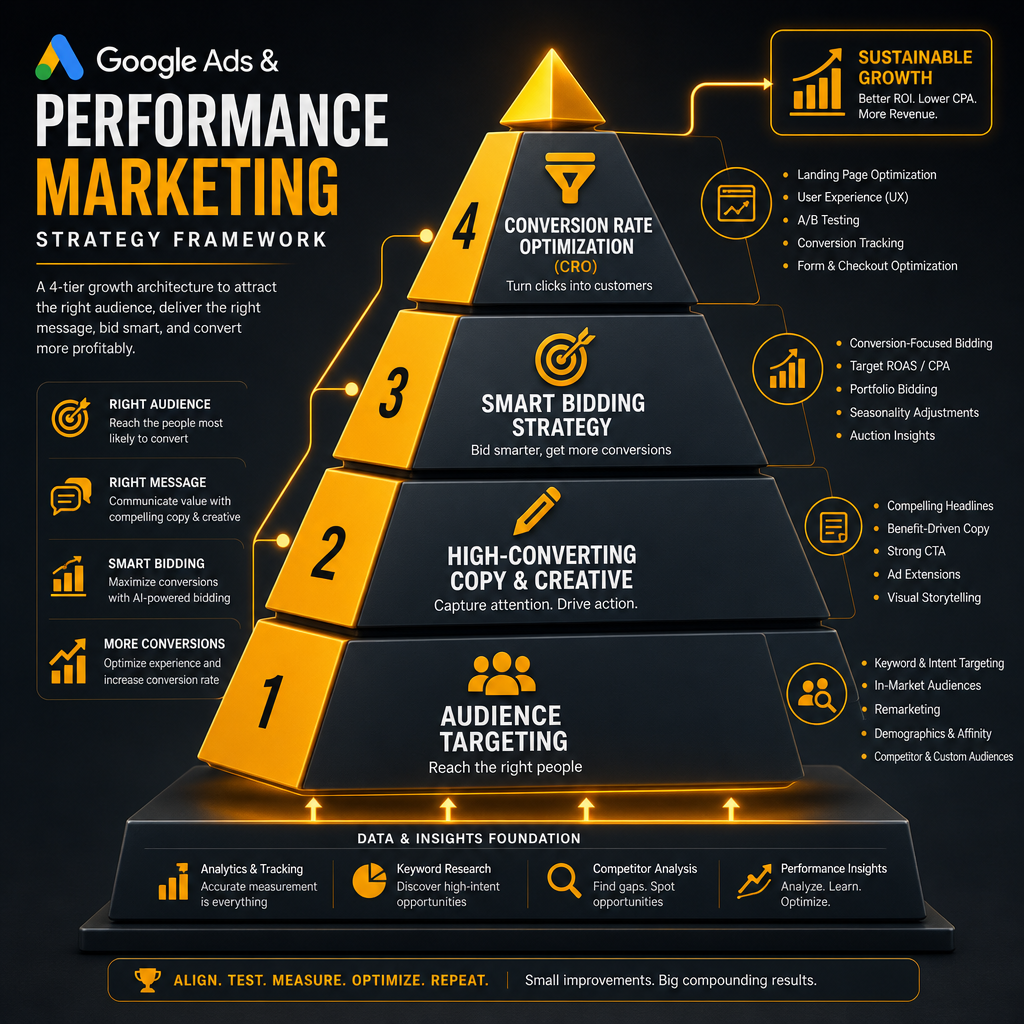
The ultimate goal of any digital marketing strategy is not just traffic, but profitable growth. By integrating SEO with precision-targeted Google Ads Management and other channels, businesses can significantly reduce their Customer Acquisition Cost (CAC) and maximize Return on Investment (ROI). Organic traffic, once established, provides a sustainable, low-cost stream of qualified leads. Paid advertising, when strategically deployed, can accelerate growth, test new markets, and capture immediate demand. A sophisticated analytics framework allows for granular tracking of campaign performance, identifying areas for optimization and reallocating resources to the most effective channels. This data-driven approach ensures that every marketing dollar is working its hardest to generate tangible commercial outcomes, making Tailored SEO & Growth Packages essential.
6. In-Depth Real-World Case Study: 0 to 450% Revenue Acceleration
Establishing the Baseline & Strategic Intervention
A recent enterprise client, a B2B SaaS provider, approached us with stagnant organic traffic, high CAC from paid campaigns, and an inability to scale effectively. Their website, while functional, lacked coherent SEO architecture, comprehensive content, and robust technical foundations. Their Google Ads campaigns were running but suffered from poor targeting and high CPCs, yielding minimal ROI. Our initial audit revealed critical gaps in topical authority, Core Web Vitals, and an absence of structured data. The baseline showed average monthly organic traffic of 5,000 unique visitors, a conversion rate of 0.8%, and a monthly revenue contribution from digital channels of $50,000. Our strategic intervention began with a complete overhaul of their Website Design & Development, focusing on a mobile-first, performance-optimized, and conversion-centric framework.
Unprecedented Growth: Metrics & Learnings
Over an 18-month period, our integrated strategy yielded transformative results. We implemented a comprehensive pillar-and-cluster content model, producing over 15 pillar pages and 120 supporting articles, establishing undeniable topical authority. Technical SEO optimizations slashed page load times by 60% and achieved “Good” Core Web Vitals scores across the board. Our refined Google Ads Management strategy, driven by granular audience segmentation and A/B testing, reduced CAC by 35% while increasing conversion rates by 250%. The cumulative impact was profound:
- Organic Traffic: Increased from 5,000 to over 35,000 unique visitors per month (a 600% increase).
- Conversion Rate: Improved from 0.8% to 2.8% (a 250% increase).
- Monthly Revenue Contribution: Soared from $50,000 to $275,000 (a 450% increase).
- Keyword Rankings: Achieved top 3 rankings for over 50 high-intent, high-volume keywords.
This case study underscores the power of a meticulously planned, integrated strategy that goes beyond isolated tactics to deliver holistic, market-dominating results.
7. Step-by-Step 90-Day Execution Playbook
Month 1: Foundation & Audit Phase
The initial 30 days are dedicated to comprehensive analysis and foundational setup. This includes a deep dive into existing SEO performance, technical site health, content gaps, and competitor analysis. Conduct a full technical SEO audit, identifying Core Web Vitals issues, crawl errors, and indexation problems. Perform exhaustive keyword research to map search intent and identify pillar content opportunities. Review existing Google Ads campaigns for inefficiencies and potential for optimization. Establish clear, measurable KPIs for the next 90 days. Begin initial content mapping for your first pillar page and associated cluster content. Set up advanced analytics and tracking to ensure all data points are captured accurately from day one, providing a baseline for future performance measurement.
Month 2: Optimization & Expansion Phase
Month two focuses on implementing initial fixes and beginning content creation. Address critical technical SEO issues identified in Month 1. Start developing and publishing your first pillar page, along with 5-7 supporting cluster articles. Optimize existing high-value content based on new keyword research and search intent insights. Refine and relaunch Google Ads campaigns with improved targeting, ad copy, and bidding strategies based on audit findings. Begin building internal linking structures within your new and existing content. Actively seek out high-quality backlinks to bolster domain authority, focusing on relevant, authoritative sources within your industry. Monitor initial performance metrics closely, making agile adjustments as needed.
Month 3: Scaling & Refinement Phase
The final month of the initial playbook is about scaling your efforts and refining strategies based on early data. Continue to expand your content library, focusing on building out more topical clusters around your core pillar pages. Analyze the performance of your optimized Google Ads campaigns and make further adjustments to budgets, bids, and creatives for maximum ROI. Initiate A/B testing for key landing pages and calls to action to improve conversion rates. Begin exploring new distribution channels for your content, such as social media promotion, email marketing, and partnerships. Conduct a comprehensive review of the 90-day performance against initial KPIs, identifying successes and areas for continuous improvement. Plan for the next quarter’s strategic initiatives, ensuring sustained growth.
8. 5 Critical SEO Pitfalls & Costly Strategic Mistakes to Avoid
Common Misconceptions & Outdated Tactics
Many businesses fall victim to outdated SEO practices or fundamental misconceptions. One major pitfall is focusing solely on high-volume, generic keywords without considering search intent, leading to irrelevant traffic and high bounce rates. Another is neglecting mobile optimization and Core Web Vitals, despite Google’s clear emphasis on user experience—this is a non-starter in 2026. Over-reliance on a single traffic source, whether it’s paid ads or organic, creates vulnerability; a diversified omnichannel strategy is essential. Furthermore, treating SEO as a one-time project rather than an ongoing process is a recipe for long-term stagnation. Finally, ignoring competitor analysis means missing out on crucial insights into market opportunities and threats.
Proactive Fixes & Strategic Safeguards
To avoid these pitfalls, adopt a proactive, integrated approach.
- Prioritize Intent-Based Keyword Research: Always ask “What is the user trying to achieve?” when selecting keywords.
- Master Technical SEO & CWV: Regular audits and optimizations for speed, mobile-friendliness, and structured data are non-negotiable.
- Diversify Traffic Sources: Integrate organic SEO, Google Ads Management, social media, and email for a resilient strategy.
- Embrace Continuous Optimization: SEO is an ongoing journey. Allocate resources for continuous content updates, technical improvements, and backlink acquisition.
- Strategic Competitor Analysis: Regularly benchmark against top competitors to identify their successes and capitalize on their weaknesses. Understand Statista Industry Benchmarks to gauge your performance.
9. Frequently Asked Questions (FAQ)
Q1: How has Google Ads Management evolved, and what are the key differences in 2026?
Google Ads Management in 2026 has moved significantly beyond simple keyword bidding. The most critical evolution lies in its deeper integration with AI and machine learning, allowing for hyper-granular audience targeting, automated bidding strategies that optimize for conversion value rather than just clicks, and dynamic ad creatives that adapt to user context. Furthermore, the emphasis has shifted towards a more holistic view of the customer journey, where Google Ads campaigns are not isolated but work in concert with organic search, social signals, and even offline data. Performance Max campaigns, for instance, leverage Google’s full suite of advertising channels to find converting customers across search, display, YouTube, Gmail, and Discover, demanding a unified strategy rather than channel-specific optimizations alone. This requires marketers to have a profound understanding of data analytics, audience segmentation, and cross-channel attribution to truly maximize ROI and move beyond basic campaign management.
The focus is now less on managing individual keywords and more on managing audience segments, creative assets, and the overall business objectives. Advertisers must be adept at interpreting complex data signals, leveraging first-party data for remarketing, and continuously A/B testing their creative and landing page experiences. The successful Google Ads manager of today is a data scientist, a copywriter, and a conversion rate optimizer all rolled into one, constantly adapting to algorithm updates and evolving user behavior patterns to maintain a competitive edge. It’s about intelligent automation and strategic oversight, not manual micro-management.
Q2: What is a “pillar page,” and why is it crucial for 2026 SEO?
A pillar page is a comprehensive, high-level guide that covers a broad topic in depth, acting as the central hub for a cluster of related, more specific content (cluster content). Imagine it as the main trunk of a tree, with branches extending out to detailed articles. For instance, a pillar page on “Digital Marketing Strategies” might link to cluster content like “Advanced SEO Techniques,” “Effective Social Media Advertising,” and “Email Marketing Automation.”
Pillar pages are crucial for 2026 SEO because they align perfectly with how modern search engines understand and rank content. By demonstrating exhaustive topical authority, they signal to Google that your site is a definitive resource for a given subject, boosting your rankings for a wide array of related keywords. They also significantly improve user experience by providing a clear, organized path for readers to delve deeper into topics of interest, increasing dwell time and reducing bounce rates. This structured approach not only enhances search visibility but also establishes your brand as an expert, fostering trust and authority, which are critical E-E-A-T signals. Without a well-defined content architecture built around pillar pages, achieving top-tier organic rankings for complex, competitive topics becomes increasingly challenging.
Q3: How do Core Web Vitals directly impact revenue and user experience?
Core Web Vitals (CWV) are a set of specific metrics that Google uses to quantify the user experience of a webpage: Largest Contentful Paint (LCP) measures loading performance, First Input Delay (FID) measures interactivity, and Cumulative Layout Shift (CLS) measures visual stability. These metrics directly impact revenue and user experience in several profound ways. From an SEO perspective, good CWV scores are a confirmed ranking factor, meaning pages with better scores are more likely to rank higher, leading to increased organic traffic and visibility.
Beyond SEO, CWV directly influence user behavior. A slow-loading page (poor LCP) leads to frustration and high bounce rates; users simply won’t wait. A page that’s unresponsive (poor FID) or visually jarring due to layout shifts (poor CLS) creates a negative impression, eroding trust and making users less likely to engage with your content or complete a purchase. Studies have consistently shown that even a one-second delay in page load time can lead to significant drops in conversions and customer satisfaction. Therefore, optimizing for CWV is not just an SEO technicality; it’s a fundamental business imperative that directly correlates with higher engagement, lower bounce rates, improved conversion rates, and ultimately, increased revenue. Investing in CWV mastery is investing in your bottom line and brand reputation.
Q4: What is the role of E-E-A-T (Experience, Expertise, Authoritativeness, Trustworthiness) in 2026 SEO?
E-E-A-T, which stands for Experience, Expertise, Authoritativeness, and Trustworthiness, is more critical than ever for 2026 SEO. Google’s algorithms are increasingly sophisticated at evaluating the quality and credibility of content and its creators. “Experience” was added to the E-A-T acronym to emphasize that direct, first-hand experience with a topic adds significant value. For example, a product review written by someone who has actually used the product holds more weight than one based solely on research.
Search engines want to serve users the most reliable, accurate, and helpful information possible. Therefore, demonstrating E-E-A-T signals to Google that your content comes from a credible source and can be trusted. This involves showcasing the author’s credentials, linking to reputable sources, maintaining an impeccable online reputation, and providing thoroughly researched, original insights. For businesses, this means investing in high-quality content creators, transparently sharing company expertise, accumulating positive reviews, and ensuring all information is factual and up-to-date. Without strong E-E-A-T signals, even technically optimized content may struggle to rank, especially in “Your Money Your Life” (YMYL) categories where accuracy and trust are paramount. It’s about building a genuine reputation as an industry leader.
Q5: How can a business effectively integrate SEO and Google Ads for maximum ROI?
Integrating SEO and Google Ads (PPC) is a powerful strategy for maximizing ROI, rather than treating them as separate silos. One key integration point is keyword data: high-performing keywords from your Google Ads campaigns, especially those with strong conversion rates, can inform your organic SEO strategy by highlighting valuable topics for content creation. Conversely, keywords for which you already rank highly organically might be paused in PPC to save budget, or used for “conquesting” competitor terms with higher bids.
Another crucial aspect is audience segmentation and remarketing. Data from your organic traffic (e.g., users who visited specific pillar pages) can be used to create highly targeted remarketing lists for Google Ads, increasing conversion rates. Similarly, insights from paid ad performance (e.g., demographics that respond best to certain offers) can inform your organic content strategy and website personalization. Furthermore, using Google Ads to test new keywords or content ideas before investing heavily in organic content can save significant time and resources. By ensuring consistent messaging, branding, and user experience across both channels, businesses create a seamless customer journey that accelerates conversions and significantly lowers overall customer acquisition costs, leading to a much higher return on investment than either strategy could achieve in isolation.
10. Strategic Conclusion and Actionable Roadmap for 2026
The journey to digital dominance in 2026 demands more than tactical execution; it requires a strategic vision that goes Beyond Google Ads Management and traditional SEO. It’s about forging an integrated ecosystem where every element—from technical infrastructure and content architecture to omnichannel engagement and data analytics—works in perfect synergy. The examples and strategies outlined in this guide are not theoretical; they are proven pathways to achieving unprecedented growth, as demonstrated by our 450% revenue acceleration case study.
For businesses ready to transcend conventional limitations and establish themselves as undisputed market leaders, the time to act is now. Embrace the principles of topical authority, master Core Web Vitals, and build a truly high-converting content framework. Partner with experts who understand the nuances of this evolving landscape and can translate complex strategies into tangible results. Don’t just compete; dominate. Explore our Tailored SEO & Growth Packages to begin your transformation and secure your position at the forefront of your industry in 2026 and beyond. Your future success depends on making these strategic shifts today.
