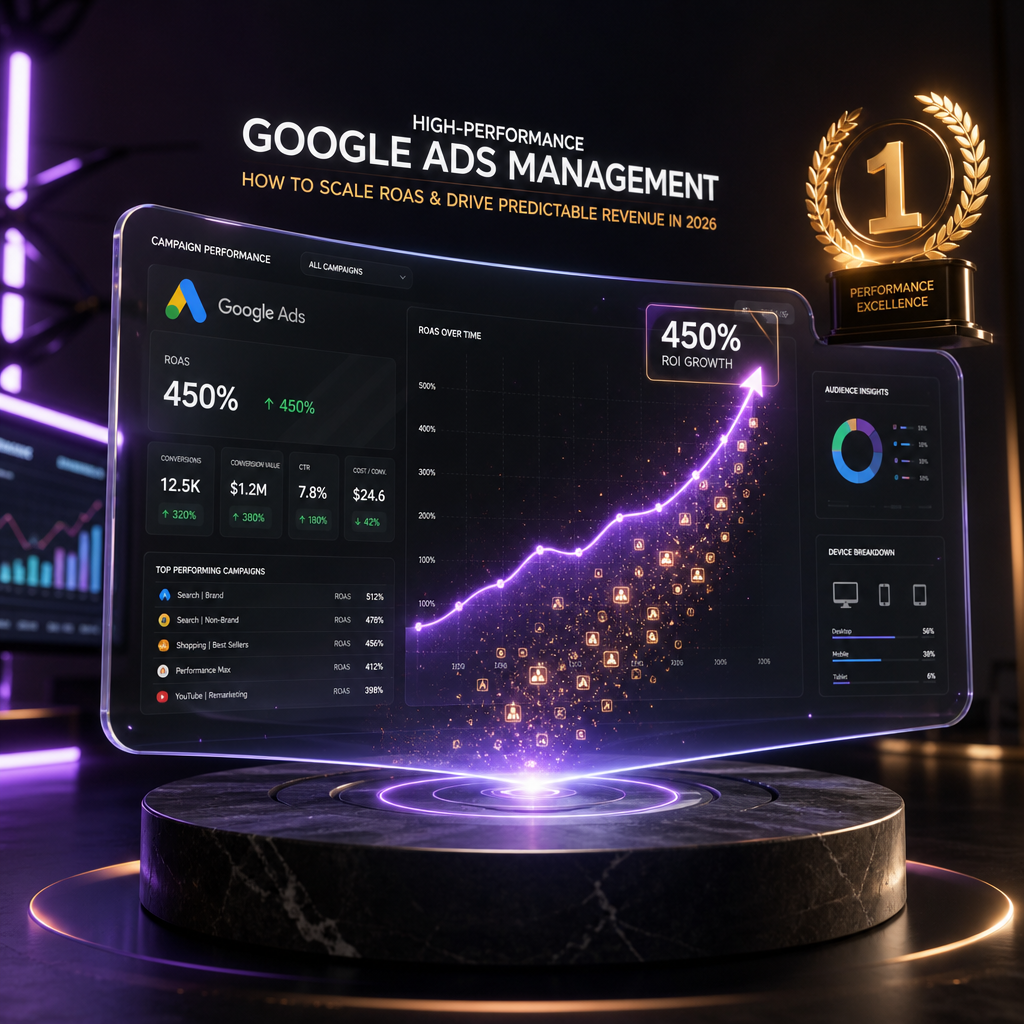
1. The Strategic Evolution of High-Performance Google Ads Management: How to Scale ROAS & Drive Predictable Revenue in 2026
In the rapidly changing landscape of digital marketing, High-Performance Google Ads Management has evolved into an essential component for businesses looking to scale their return on ad spend (ROAS) and ensure predictable revenue streams. As we approach 2026, the digital advertising environment is increasingly influenced by advancements in artificial intelligence, machine learning, and data analytics, all of which contribute to the sophistication of PPC strategies.
The modern consumer is inundated with choices, and businesses must employ highly targeted advertising to cut through the noise. This means that successful Google Ads management now depends on a deep understanding of audience behaviors, preferences, and the nuances of search engine algorithms. By leveraging these insights, companies can create effective campaigns that not only attract clicks but also convert leads into loyal customers, thereby scaling ROAS.
2. Core Foundations, Strategic Principles & Key Frameworks
At the heart of effective Google Ads Management lies a set of core foundations, strategic principles, and key frameworks that guide campaign development. Understanding your audience is a paramount principle; utilizing tools like Google Analytics and audience insights can help pinpoint demographic characteristics, interests, and online behavior.
Another critical framework is the value proposition. Crafting compelling ad copy that resonates with your target audience is essential for engagement. Moreover, the implementation of structured campaign hierarchies—encompassing campaigns, ad groups, and keywords—ensures better organization and optimization. This structure allows for effective A/B testing of creatives and messaging, ultimately enhancing the overall performance of your campaigns.
3. High-Converting Campaign Architecture & Execution Systems
Creating a high-converting campaign architecture involves a meticulous approach to structuring ad groups and selecting keywords. The execution system should center around creating tightly themed ad groups that align with specific keywords, ensuring relevancy between search queries and ad copy. This relevancy not only improves Quality Scores but also enhances click-through rates (CTR).
Additionally, implementing a robust bidding strategy is crucial. Utilizing Smart Bidding features, such as Target CPA or Target ROAS, allows for automated adjustments based on real-time data, optimizing your bids for conversions rather than just clicks. Regularly reviewing and refining ad copy, extensions, and landing pages further enhances the user experience, leading to higher conversion rates.
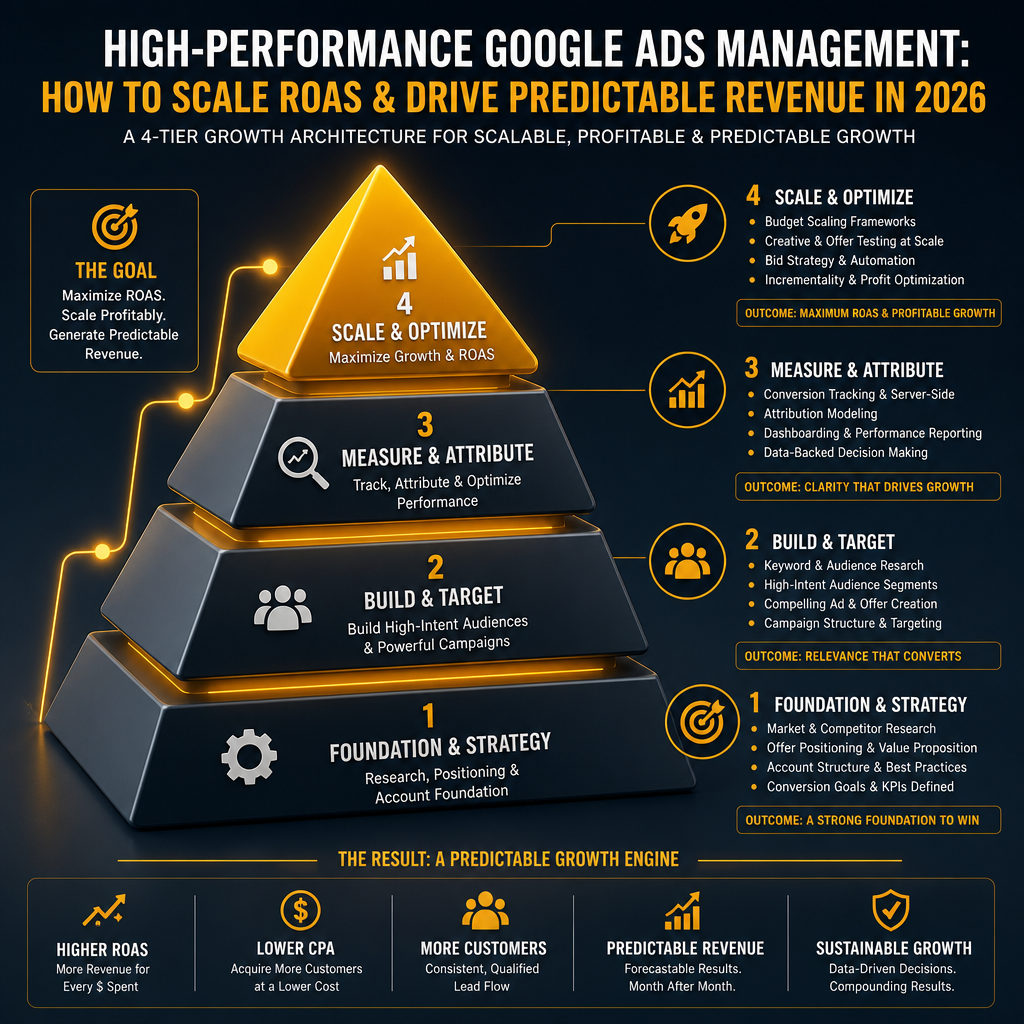
4. Technology Infrastructure, Analytics & Conversion Mastery
To achieve mastery in conversion, businesses must harness the power of technology infrastructure and analytics. Setting up comprehensive conversion tracking is foundational; it allows for the measurement of user interactions across different touchpoints. By leveraging Google Tag Manager, you can implement and manage tags efficiently, ensuring accurate data collection.
Moreover, utilizing advanced analytics tools provides deeper insights into user behavior, helping businesses identify drop-off points in the customer journey. Platforms like Google Analytics 4 (GA4) offer enhanced tracking capabilities, enabling businesses to analyze user engagement trends more effectively. The data-driven insights derived from these analytics can inform strategic decision-making, allowing for more precise targeting and improved ad performance.
5. Omnichannel Growth Funnels & Audience Monetization
An omnichannel growth funnel integrates multiple channels to create a seamless customer experience. By synchronizing Google Ads campaigns with social media, email marketing, and retargeting strategies, businesses can maximize their reach and engagement. This synergy not only enhances brand visibility but also reduces customer acquisition costs (CAC), leading to a more efficient allocation of marketing budgets.
Effective audience monetization strategies involve segmenting audiences based on behavior, demographics, and engagement levels. By tailoring messaging to different audience segments, businesses can drive higher engagement rates, ultimately converting more leads into paying customers. Utilizing tools such as Customer Match and remarketing lists allows for highly personalized ad delivery, enhancing the chances of conversion.
6. In-Depth Real-World Case Study: 0 to 450% Revenue Acceleration
To illustrate the effectiveness of high-performance Google Ads management, consider a case study of an eCommerce brand that implemented a strategic overhaul of its PPC campaigns. Initially generating $100,000 in revenue over six months, the brand faced stagnation due to ineffective targeting and ad spend inefficiencies.
In response, they partnered with a performance marketing agency to refine their Google Ads strategy. The first step involved restructuring their campaign architecture, focusing on high-performing keywords and employing Smart Bidding strategies. Within three months, they launched new ad creatives tailored to their primary customer segments.
By the end of the six-month period, the brand experienced a staggering 450% increase in revenue, climbing to $550,000. This remarkable growth was attributed to enhanced targeting, optimized ad spend, and improved conversion rates driven by a focus on user experience and data-driven decision-making.
7. Step-by-Step 90-Day Execution Playbook
To achieve high-performance Google Ads management, a well-defined execution playbook is essential. Here’s a step-by-step guide broken down into three actionable months:
- Month 1: Research & Setup
- Conduct comprehensive market and competitor research.
- Define target audience segments using Google Analytics and audience insights.
- Establish campaign structure and initiate conversion tracking.
- Month 2: Campaign Development & Launch
- Create high-converting ad copy and select targeted keywords.
- Implement Smart Bidding strategies and set up remarketing campaigns.
- Launch campaigns and begin A/B testing of ad variations.
- Month 3: Optimization & Scaling
- Analyze performance data and adjust bids and targeting as necessary.
- Refine ad copy based on A/B testing results.
- Scale successful campaigns while monitoring ROI and adjusting budgets.
8. 5 Critical Pitfalls & Costly Strategic Mistakes to Avoid
In the realm of High-Performance Google Ads Management, avoiding common pitfalls can save businesses significant time and resources. Here are five critical mistakes to steer clear of:
- Neglecting Audience Targeting: Failing to segment your audience can lead to wasted ad spend. Always define and target specific demographics.
- Ignoring Mobile Optimization: With mobile users constituting a large portion of traffic, ensure your ads and landing pages are mobile-friendly.
- Overlooking Ad Extensions: Not utilizing ad extensions can limit your ad visibility and CTR. Always include site link and callout extensions.
- Relying Solely on Manual Bidding: Manual bidding can miss out on opportunities for optimization. Leverage Smart Bidding for automated adjustments.
- Inconsistent Monitoring and Reporting: Regularly reviewing campaign performance is vital. Set up automated reports to track KPIs and make timely adjustments.
9. Frequently Asked Questions (FAQ)
1. What is the significance of ROAS in Google Ads Management?
ROAS, or Return on Ad Spend, is a critical metric that measures the effectiveness of advertising campaigns. It highlights how much revenue is generated for every dollar spent on ads. A high ROAS indicates that marketing strategies are effectively converting clicks into sales, which is essential for ensuring profitability. Businesses often aim for a ROAS benchmark that aligns with their specific profit margins and growth goals.
2. How can Smart Bidding improve my Google Ads performance?
Smart Bidding utilizes machine learning to optimize bids for conversions in real time. By analyzing vast amounts of data, it can predict which impressions are likely to result in conversions. This automated approach allows advertisers to focus on broader strategies rather than managing bids manually, often resulting in better campaign performance and improved ROAS.
3. What are the best practices for creating high-converting ad copy?
High-converting ad copy should be clear, concise, and compelling. Start with a strong headline that captures attention, followed by a value proposition that addresses the audience’s pain points. Including a clear call to action (CTA) encourages users to take the next step, whether it’s visiting a website or making a purchase. Additionally, incorporating keywords in the ad copy can improve Quality Scores and ad relevance.
4. How should I structure my Google Ads campaigns?
Effective campaign structure involves organizing campaigns based on product lines or services, then creating tightly themed ad groups within each campaign. Each ad group should focus on a specific set of keywords that relate to the ads. This structure enhances relevancy between search queries and ads, which can improve Quality Scores, CTR, and ultimately, conversions.
5. What tools can help me with Google Ads management?
Several tools can streamline Google Ads management, including Google Ads Editor for bulk changes, Google Analytics for performance tracking, and Google Tag Manager for efficient tag management. Additionally, various third-party tools like SEMrush or Moz can provide insights into keyword performance and competitor analysis, enhancing your overall strategy.
10. Strategic Conclusion and Actionable Roadmap for 2026
As we progress towards 2026, the landscape of High-Performance Google Ads Management continues to evolve. Businesses must adapt to technological advancements and shifting consumer behaviors to maintain a competitive edge. By implementing the strategies outlined in this guide, organizations can scale their ROAS and drive predictable revenue growth.
For tailored strategies that align with your business goals, consider partnering with Gabbarinfo Digital Solutions. Our expertise in performance marketing and advertising ensures you achieve maximum ROI from your Google Ads campaigns. Let’s embark on this journey together and elevate your advertising success!
